



Confused Between Invisalign or Braces For Kids?
This is one of the family’s most common questions when considering orthodontic treatment for kids in Branson. Choosing between invisalign vs. braces for kids can feel overwhelming, especially with so many opinions online. That’s why in this article, we’ve created a clear, evidence-based comparison of Invisalign vs. braces for kids—covering how each treatment works, effectiveness, lifestyle differences, costs, and when each option is recommended.
At Branson Kids Dental, we understand that parents want the best for their child’s smile, so this guide is designed to help you make an informed decision, backed by expert insight.
Invisalign vs. Braces For Kids: How Each Treatment Works
Braces in Branson
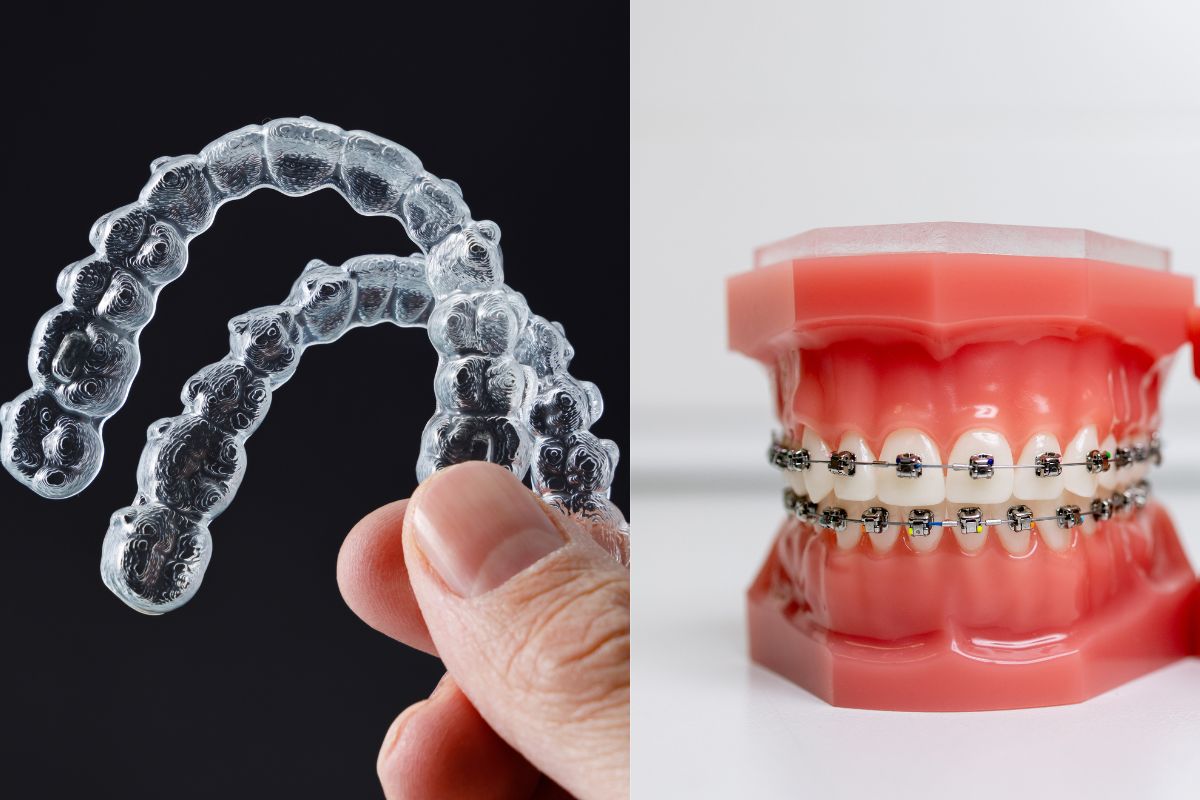
Traditional braces use fixed metal or ceramic brackets connected by wires. Adjustments are made every few weeks to shift teeth into alignment gradually. They are always on, which means compliance isn’t an issue.
Invisalign Treatment For Kids Branson
Invisalign treatment for kids in Branson involves a series of clear, removable aligners. Kids wear them 20–22 hours daily, switching to a new set every 1–2 weeks. Invisalign First is specially designed for children with mixed dentition (a mix of baby and adult teeth).
How Do Invisalign Treatments For Kids Compare to Traditional Braces?
Invisalign vs. Traditional Braces: Effectiveness & Case Suitability
- When Braces May Be Necessary: Braces are often the best choice for complex cases—such as severe crowding, rotated teeth, or significant bite issues. In the debate of braces vs. Invisalign, braces usually win for more challenging orthodontic corrections.
- Where Invisalign Works Well: Invisalign for teens in Branson is highly effective for mild to moderate misalignment in responsible children and teenagers. If your child can wear aligners as instructed, Invisalign can deliver excellent results.
Invisalign vs. Traditional Braces: Treatment Duration
- Invisalign: Most kids complete treatment in 6–18 months, though some cases may take up to 24 months. This is often quicker than traditional braces for simpler misalignments.
- Braces: Treatment usually lasts 18–36 months. This makes braces a reliable option for comprehensive correction, but parents weighing Invisalign vs. traditional braces should keep treatment time in mind.
Invisalign vs. Traditional Braces: Appearance & Lifestyle Considerations
- Invisalign: Nearly invisible, removable for meals and brushing, and no food restrictions. For image-conscious teens, the choice between Invisalign braces vs braces often comes down to confidence and convenience.
- Braces: While visible, braces can be customized with colorful bands, making them fun for some kids. They require more careful cleaning and limit sticky or hard foods.
Invisalign vs. Traditional Braces: Comfort & Compliance
- Invisalign: Smooth plastic aligners cause less irritation than brackets. However, Invisalign relies heavily on your child’s discipline. Parents often ask: “Can kids get Invisalign instead of braces?” The answer is yes—if they are responsible enough to wear them consistently.
- Braces: Always in place, which removes compliance concerns. Braces can cause temporary discomfort after adjustments but guarantee steady progress.
Invisalign or Traditional Braces: When to Choose What
Here’s a quick decision guide:
- Choose Braces if: The case is complex, your child is younger, or compliance is a concern.
- Choose Invisalign if: Your child has mild-to-moderate issues, is self-conscious about appearance, and can reliably follow wear-time instructions.
Parents often ask, “Braces or Invisalign for a 12-year-old?” or “Braces or Invisalign for a 13-year-old?” The right answer depends on your child’s unique case and responsibility level.
Can Kids Use Invisalign Instead of Braces?
Choosing Invisalign or braces for kids depends on their dental needs, comfort, and lifestyle. Invisalign offers a nearly invisible, removable option, while traditional braces provide strong, precise correction for more complex issues. A pediatric dentist can help determine the best choice for your child’s smile.
Conclusion
According to the American Association of Orthodontists (AAO), children should have their first orthodontic evaluation by age 7. Whether you’re comparing the difference between traditional braces and Invisalign or wondering about the best choice for your teen, the safest step is to consult with a board-certified orthodontist.
At Branson Kids Dental, we’re here to guide families through the Invisalign vs. traditional braces for kids decision with expertise and compassion. Schedule a consultation today to discover whether braces or Invisalign is right for your child’s smile.
FAQs
Q. What’s Better For Kids, Braces or Invisalign?
A: Both straighten teeth effectively. Invisalign is discreet, removable, and best for mild to moderate cases. Braces work well for complex issues and don’t rely on compliance. Costs and treatment time can differ.
Q. Why is Invisalign Not Recommended For Children?
A: Younger children may not qualify, and since aligners are removable, treatment success depends on the child’s responsibility to wear them consistently.
Q. Which is Faster Braces or Invisalign?
A: Invisalign can be quicker for mild to moderate cases (around 12–18 months), while braces may take 18–24 months. For complex issues, braces are often more effective.